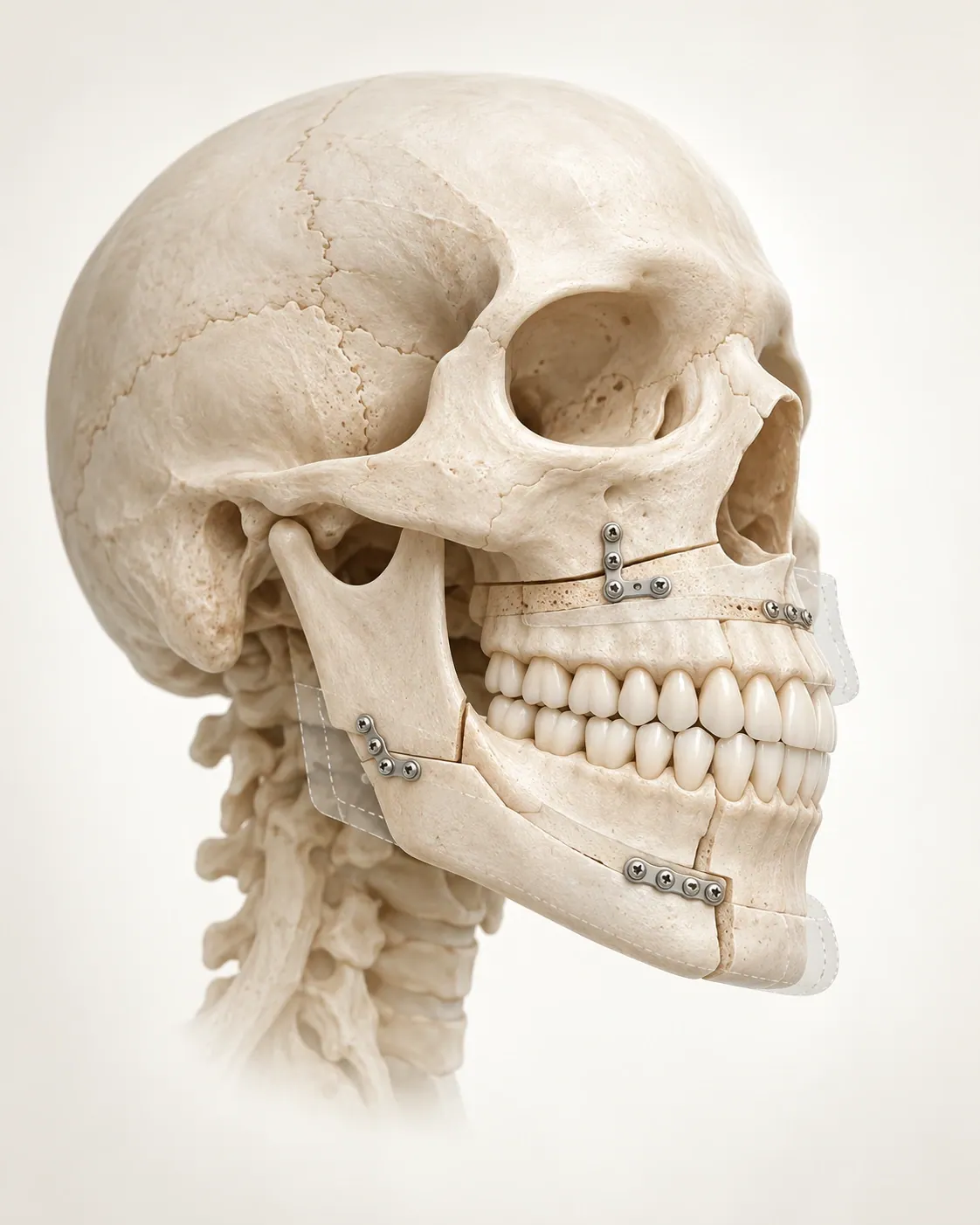
A carefully planned approach to your care
Understanding your diagnosis is the first step towards an informed decision. Treatment is not selected from a photograph alone: symptoms, anatomy, dental condition and your medical history must be considered together. This information explains possible approaches and helps you prepare questions for a consultation; it does not replace a personal examination.
What does this treatment involve?
Orthognathic surgery repositions the upper jaw, lower jaw or both to address a skeletal discrepancy affecting the bite and facial balance. It is usually coordinated with orthodontic treatment. It is different from simply moving teeth with braces, and the aim is a clinically justified correction rather than a guaranteed cosmetic transformation.
Who may benefit?
Assessment may be relevant for significant skeletal underbite, overbite, open bite or asymmetry when orthodontics alone cannot adequately address the problem. Selected functional concerns may also warrant specialist investigation. Growth status, joint health, airway assessment where indicated, general health and realistic expectations influence suitability; surgery is commonly planned after skeletal growth is sufficiently complete.
Advantages and alternative options
For suitable patients, repositioning the jaws can improve tooth contact and chewing mechanics and may change facial proportions. Outcomes and adaptation differ. Orthodontic camouflage, observation or other procedures can be alternatives depending on the discrepancy. Jaw surgery is not a guaranteed treatment for TMJ pain, and airway-related indications need their own diagnostic assessment.
Clinical assessment and digital planning
The planning visit includes examination of the teeth, gums, bite and relevant jaw structures. Tell the clinician about previous operations, smoking, diabetes, allergies, anticoagulants, antiresorptive medicines and other prescriptions. Do not stop medication yourself. Imaging is selected only when clinically justified. Discuss alternatives, anaesthesia, the stages of care and a written estimate before consenting.
How treatment is performed
An orthodontist and maxillofacial surgeon coordinate records, dental alignment and three-dimensional surgical planning when indicated. Under general anaesthesia in a hospital setting, controlled bone cuts allow planned jaw repositioning, followed by fixation with plates and screws. One or both jaws may be treated. Orthodontic finishing and regular bite checks remain part of care after surgery.
Recovery and comfort
Swelling, fatigue and temporary limitation of mouth opening are common, with a staged diet and prescribed activity restrictions. Altered sensation of the lip, chin or gums may occur and sometimes persist. Follow instructions on elastics, oral cleaning and follow-up. Eating normally and returning to demanding exercise must wait for the team’s clearance.
Treatment duration and next steps
The full pathway often takes many months and may extend beyond a year because orthodontics precedes and follows the operation. Surgery takes several hours in many cases; hospital stay and time away from work are individual. Bone recovery generally takes weeks to months, while soft tissues and sensation may continue changing for longer.
Aftercare and long-term review
Follow the individual cleaning, diet and activity instructions provided by your clinical team. Attend scheduled reviews, even if you feel comfortable, and report new swelling, bleeding, altered sensation or difficulties with the bite. If travelling, arrange local aftercare and emergency contact details before leaving; remote photographs cannot replace an examination when a complication is suspected.
Function and quality of life
The objectives are to support comfortable oral function and a manageable long-term result. Baseline symptoms, chewing ability and hygiene access should be discussed before treatment and reassessed afterwards. Improvement is not guaranteed, and the most appropriate option may be a staged procedure, conservative care or specialist referral rather than immediate surgery.
Risks and important considerations
Discuss bleeding, infection, nerve-related sensory change, tooth or root injury, bite changes, relapse, joint symptoms and the possibility of further procedures. Anaesthetic risk and medical fitness must also be assessed. Facial appearance cannot be predicted perfectly from a simulation, and surgical planning requires informed consent to functional and aesthetic uncertainties.
Seek urgent medical care for difficulty breathing or swallowing, rapidly increasing swelling, uncontrolled bleeding or severe systemic illness. Contact the treating team promptly for fever, increasing pain or persistent new numbness.
Your individual treatment plan
Suitability depends on clinical examination and individual treatment planning. A consultation should establish the diagnosis, realistic goals and the balance between benefits and risks. Ask which clinician will provide each stage, where treatment will take place and how complications will be managed. A final recommendation and timetable can be given only after assessment.
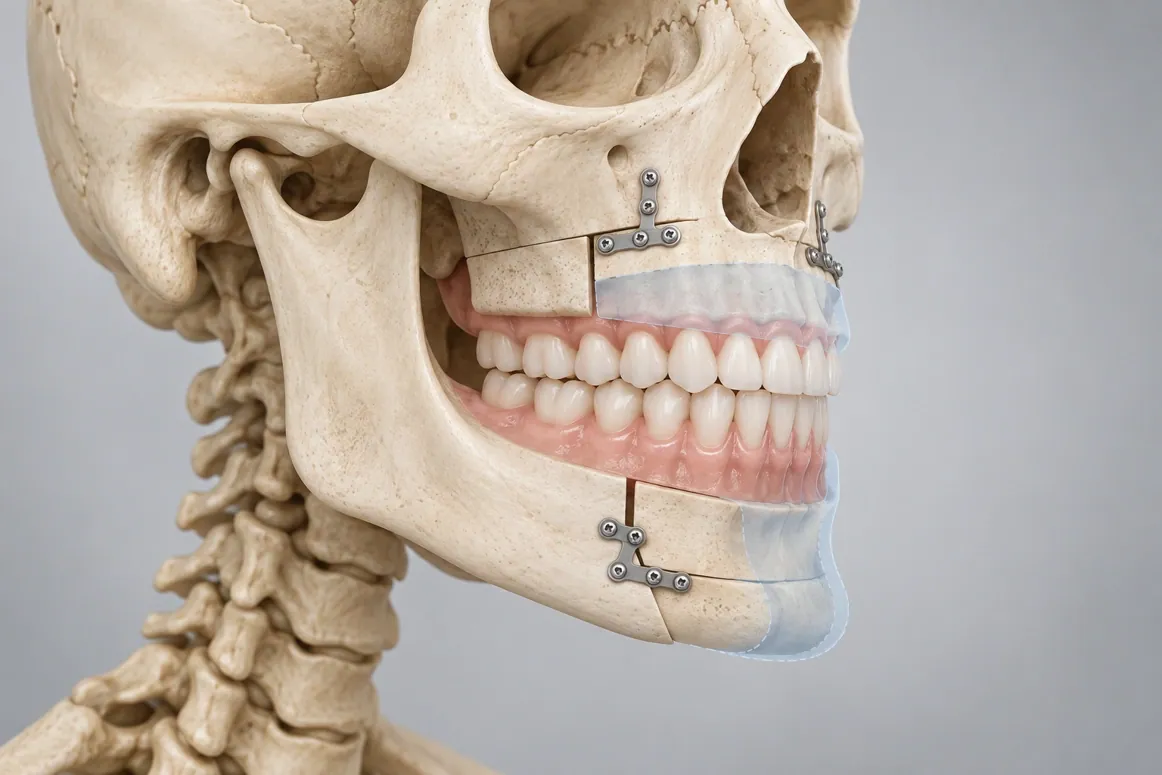
Educational 3D illustration; individual anatomy and treatment planning vary.
Frequently asked questions
What is this treatment?
Orthognathic surgery repositions the upper jaw, lower jaw or both to address a skeletal discrepancy affecting the bite and facial balance. It is usually coordinated with orthodontic treatment. It is different from simply moving teeth with braces, and the aim is a clinically justified correction rather than a guaranteed cosmetic transformation.
Am I a suitable candidate?
Assessment may be relevant for significant skeletal underbite, overbite, open bite or asymmetry when orthodontics alone cannot adequately address the problem. Selected functional concerns may also warrant specialist investigation. Growth status, joint health, airway assessment where indicated, general health and realistic expectations influence suitability; surgery is commonly planned after skeletal growth is sufficiently complete.
Are there alternatives to this treatment?
For suitable patients, repositioning the jaws can improve tooth contact and chewing mechanics and may change facial proportions. Outcomes and adaptation differ. Orthodontic camouflage, observation or other procedures can be alternatives depending on the discrepancy. Jaw surgery is not a guaranteed treatment for TMJ pain, and airway-related indications need their own diagnostic assessment.
What assessment is needed beforehand?
The planning visit includes examination of the teeth, gums, bite and relevant jaw structures. Tell the clinician about previous operations, smoking, diabetes, allergies, anticoagulants, antiresorptive medicines and other prescriptions. Do not stop medication yourself. Imaging is selected only when clinically justified. Discuss alternatives, anaesthesia, the stages of care and a written estimate before consenting.
What happens during the procedure?
An orthodontist and maxillofacial surgeon coordinate records, dental alignment and three-dimensional surgical planning when indicated. Under general anaesthesia in a hospital setting, controlled bone cuts allow planned jaw repositioning, followed by fixation with plates and screws. One or both jaws may be treated. Orthodontic finishing and regular bite checks remain part of care after surgery.
What should I expect during recovery?
Swelling, fatigue and temporary limitation of mouth opening are common, with a staged diet and prescribed activity restrictions. Altered sensation of the lip, chin or gums may occur and sometimes persist. Follow instructions on elastics, oral cleaning and follow-up. Eating normally and returning to demanding exercise must wait for the team’s clearance.
How long does the treatment take?
The full pathway often takes many months and may extend beyond a year because orthodontics precedes and follows the operation. Surgery takes several hours in many cases; hospital stay and time away from work are individual. Bone recovery generally takes weeks to months, while soft tissues and sensation may continue changing for longer.
What risks should I discuss?
Discuss bleeding, infection, nerve-related sensory change, tooth or root injury, bite changes, relapse, joint symptoms and the possibility of further procedures. Anaesthetic risk and medical fitness must also be assessed. Facial appearance cannot be predicted perfectly from a simulation, and surgical planning requires informed consent to functional and aesthetic uncertainties.
What follow-up will I need?
Follow the individual cleaning, diet and activity instructions provided by your clinical team. Attend scheduled reviews, even if you feel comfortable, and report new swelling, bleeding, altered sensation or difficulties with the bite. If travelling, arrange local aftercare and emergency contact details before leaving; remote photographs cannot replace an examination when a complication is suspected.
Other treatments
Explore our full range of treatments
Smile Gallery
Join 20,000+ Satisfied International Patients




Join 20,000+
Satisfied International Patients
who found their perfect smile in Istanbul’s most trusted Dental Clinic

Reviews
Read what our patients say about their experience







 70%


